

1. Certification Overview
MINSA’s primary objective is to prevent public health risks by controlling the safety and quality of medical devices, pharmaceuticals, food, cosmetics, supplements, etc. distributed in Panama’s public and private healthcare markets.
To comprehensively regulate the import and commercialization of medical devices within Panama, the latest Medical Devices Act (Law 419) and related enforcement decrees are being implemented to supplement the existing Health Act, and products are being controlled through a computerized system.
All medical devices imported, distributed, or sold in the Panama market must obtain an official Sanitary Registration Certificate (Registro Sanitario) from MINSA DNDM prior to customs clearance. Since overseas manufacturers cannot apply directly, they must appoint a Local Authorized Representative (LAR) holding a business license from the Panama Ministry of Health as the authorized representative and proceed with the application.
Panama has adopted the Global Harmonization Rules of the International Medical Device Regulatory Authority Forum (IMDRF/GHTF) to classify medical devices into four classes (Class A, Class B, Class C, and Class D) based on their risk levels. Class A, which has the lowest risk, is subject to verification primarily through basic administrative documentation and quality systems, whereas Classes B through D must pass a more complex technical documentation (Dossier) review.
Panama operates the Expedited Registration for High Standard Countries under the New Medical Devices Act (Law 419), which significantly simplifies the technical document review stage and provides fast-track preferential treatment for products that have already obtained approval from advanced global regulatory agencies such as the US FDA, European EMA/CE, and Korean MFDS, thereby shortening the time to market entry if approval is obtained in other countries.
2. Regulatory Agencies & Basic Information
| Regulatory agencies | National Medical Devices Agency (DNDM) under the Ministry of Health of Panama (MINSA) |
| Testing & Certification Bodies | Central conformity assessment method for technical documents (Dossier) through local agents |
| Language | Spanish |
| Agent | Local agent required |
3. Medical Device Classification
| Class | Risk | Example | |
|---|---|---|---|
| Class A | Low risk | • Manual Surgical Instruments: Surgical forceps, Scalpel handles, Tongue depressors • Hospital Support Equipment: Manual wheelchairs, Hospital beds, Crutches • External Hospital Consumables: Non-sterile bandages, Surgical drapes |  Surgical drapes |
| Class B | Low to Moderate risk | • Routine Monitoring & Optical Devices: Electronic blood pressure monitors, Digital thermometers, Contact lenses • Invasive Infusion & Suction Consumables: Disposable syringes, Infusion pumps, Suction catheters • Home-use Aesthetic Devices: Low-power LED skin masks, Galvanic/Microcurrent skin care tools |  Galvanic/Microcurrent skin care tools |
| Class C | Moderate-to-High risk | • Advanced Imaging & Active Systems: Diagnostic X-ray equipment, Ultrasound imaging systems, Lung ventilators • Professional Aesthetic Equipment: Clinical High-intensity focused ultrasound/HIFU, Fractional RF/Laser surgical units • Surgical Implants & Prosthetics: Orthopedic bone fixation plates & screws, Dental implants | 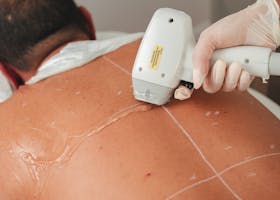 Clinical High-intensity focused ultrasound/HIFU |
| Class D | High risk | • Central Circulatory & Neurological Implants: Implantable pacemakers, Coronary/Vascular stents, Artificial heart valves • Injectable Materials for Deep Tissue: Hyaluronic acid dermal fillers, Absorbable surgical sutures, Breast implants • Critical Active Systems: Implantable defibrillators |  Hyaluronic acid dermal fillers |
4. Certification Process
- Designation of local legal representative
- Preparation of submission documents and notarization for legalization
- Medical device classification
- On-site inspection of manufacturing facilities
- Document screening process
5. Required Documents
| Administrative & Legal Documents | • Letter of Authorization (LOA) • Certificate of Free Sale (CFS) issued by the government of the country of origin • Notice of Operation for local import and distribution company in Panama |
| Quality Management System Documents | • Quality Management System Certificate (ISO 13585 Certificate / GMP) • Manufacturing Process Information & Flow Chart |
| Technical Dossier | • Product Specifications and Technical Documentation • Standardized Spanish Labeling and Instruction Manual • Product Performance & Test Reports • Clinical Evaluation Report (CER) • Sterilization & Shelf-Life Validation |
6. Validity Period & Maintenance
- Validity Period: 5 years
- Renewal: Apply for renewal 3 to 6 months before expiration
Source
MINSA Homepage