

1. Certification Overview
In Canada, medical devices refer to any tool or component used to treat, diagnose, or prevent diseases or abnormal physical conditions.
In Canada, medical devices are classified into four classes based on the expected level of risk to human health and safety, and two types of licenses are issued: the Medical Device Licence (MDL) and the Medical Device Establishment Licence (MDEL).
MDL is issued for Class 2, 3, and 4 medical devices, and MDEL is issued to companies that import, distribute, or manufacture medical devices of all classes.
2. Regulatory Agencies & Basic Information
| Regulatory Agencies | Health Canada |
| Quality System | ISO 13485 |
| Lead time / Price | Varies by grade |
| Agent | Apply for MDL without a representative |
3. Medical Device Classification
| Class | Risk | Example | |
|---|---|---|---|
| Class I | Low risk | • Non-powered Examination & Surgical Instruments: Surgical scalpels & forceps, Mechanical stethoscopes, Tongue depressors • General Assistive Products: Manual wheelchairs, Crutches, Hospital beds • External Hospital Consumables: Non-sterile bandages, Surgical drapes without antimicrobial properties | 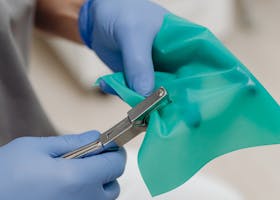 Surgical drapes without antimicrobial properties |
| Class II | Low to Moderate risk | • Home-use & Professional Aesthetic Devices: Clinical High-intensity focused ultrasound/HIFU, Microcurrent skin care tools, Powered wheelchairs • Daily Monitoring & Optical Devices: Electronic blood pressure monitors, Digital thermometers, Contact lenses • Invasive Infusion & Suction Consumables: Infusion pumps, Disposable syringes, Acupuncture needles | 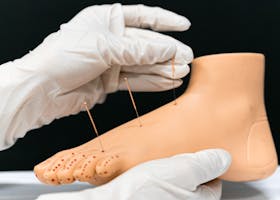 Acupuncture needles |
| Class III | Moderate to High risk | • Advanced Imaging & Therapeutic Systems: Diagnostic X-ray equipment, Ultrasound imaging systems, MRI, Medical linear accelerators • Surgical Implants & Prosthetics: Orthopedic bone fixation plates & screws, Dental endosseous implants & abutments • High-Risk Blood & Tissue Products: Blood bags, Carbon dioxide absorbers for anesthesia | 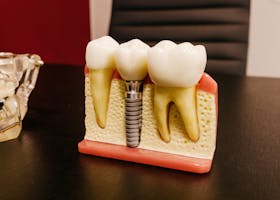 Dental endosseous implants |
| Class IV | High risk | • Central Circulatory & Neurological Implants: Implantable pacemakers, Coronary/Vascular stents, Artificial heart valves • Injectable Materials for Deep Tissue: Hyaluronic acid dermal fillers, Absorbable surgical sutures • Life-Sustaining Active Devices: Mechanical ventilators, Defibrillators, Continuous oximeter catheters | 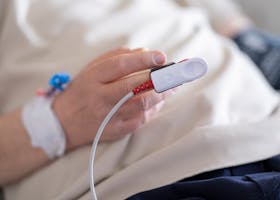 Continuous oximeter catheters |
4. Certification Process
- Check Medical Device Class
- License application
- Class I – MDEL application
- Class II&III&IV – MDL, MDEL application
- Medical Device Establishment Licence, MDEL
- Submission of Establishment Licence Application
- Health Canada medical device approval
- Verify approved medical devices
- Medical Device License, MDL
- Application when the medical device falls under Class II, III, or IV
- Manufacturer completes Device Licence application
- ISO 13485 quality system certification through the MDSAP program
- Submit the detailed information required for each Class, such as medical device information, quality system certification, and manufacturer information, to Health Canada (Heat Canada, HC) along with the application.
5. Required Documents
| Administrative & Legal Documents | Medical Device Eligibility Application (MDEL Application Form – FRM-0292): A mandatory application for business eligibility submitted to the Ministry of Health by Class I manufacturers or local Canadian importers/distributors of any class. | • Section 1: Application Type (New/Renewal/Change, etc.) • Section 2: Applicant Information and Detailed Address Group (2.1 Incorporation Address, 2.2 Contact Person Information, 2.3 Email Address, 2.4 Invoice Address) • Section 3: Activities (Operational activities such as import/distribution and classification of medical devices handled) • Section 4: Site Information (Address of the company or factory where documented post-management procedures are actually implemented) • Section 5: Supply Chain Information (Manufacturer/Supplier – Information on the manufacturer of the imported or distributed devices and all suppliers) • Sections 6 & 7: Attestations and Signature |
| Medical Device Product License Application Form (MDL Application Form): Essential basic form for obtaining official Health Canada authorization for Class II, III, and IV high-risk medical devices | • Official name of the device and type/classification of the device • Device identifier (model name, catalog number, etc.) • Manufacturer name and address as indicated on the label • Name and address of the facility where the device is actually manufactured (Manufacturing site – must be stated if different from the headquarters address) |
|
| Quality Management System Documents | • Health Canada Certified Quality Management System (CAN/CSA-ISO 13485 / MDSAP Certification) | |
| Technical Dossier by Risk Class | Class II Additional Documentation Requirements (Low-to-Moderate Risk) | • Indications for Use: Technical documentation regarding the medical conditions, purposes, and specific uses for which the device is manufactured, sold, or represented. • Standards List: A list of national and international standards applied in the design and production to meet safety and efficacy requirements. • Declaration of Conformity: A document confirming and signed by the manufacturer’s chief inspector, guaranteeing that the device meets safety and efficacy requirements. • Device Labeling: A copy of the English/French label and Instructions for Use (IFU) compliant with Health Canada regulations. |
| Class III Additional Documentation Requirements (Moderate-to-High Risk) | • Manufacturing & Packaging Materials: Documents describing the specialized equipment and packaging materials used in the device manufacturing process and packaging. • Device Design Features: Descriptions of the specific physical and technical characteristics of the device designed to operate appropriately for the relevant medical conditions and applications. • Global Market & Vigilance History: A list of countries outside of Canada where the product was sold, cumulative sales by country, and descriptions of all adverse events and voluntary/mandatory recall cases reported in global markets. • Sterilization Description (if applicable): Documents describing the sterilization process methods applied at the plant and validation if the product is sold in a sterile state. • Executive Summary of Studies: Documents summarizing all test/research reports used as the basis to confirm the safety and efficacy requirements of the device, along with the final research conclusions drawn by the manufacturer. • Published References: All technical references published in journals, conferences, etc., regarding the use, safety, and efficacy of the device. List of literature |
|
| Class IV Additional Documentation Requirements (Highest Risk) | • Comprehensive Risk Assessment Report (Risk Assessment): A detailed risk management file (ISO 14971) analyzed from design to disposal to meet safety and efficacy requirements. • Product-Specific Quality Plan (Quality Plan): A dedicated quality assurance plan to control the entire manufacturing, inspection, and post-processing associated with the device. • Material Specifications (Material Specifications): Detailed physicochemical specifications for all raw materials, chemical compositions, and components used in the manufacturing and packaging of the device. • Detailed Manufacturing Process (Detailed Manufacturing Process): Detailed manufacturing process flowcharts and descriptions of key process control parameters for the device. • Full V&Validation Reports (Full V&Validation Reports): ‘Detailed full data and test reports,’ not summaries, for all the following studies conducted to verify compliance with safety and efficacy requirements: Preclinical (animal studies, cytotoxicity, etc.) and detailed clinical study data (Pre-clinical & Clinical Studies), Manufacturing Process Validation Studies data (Process Validation Studies), and Software Validation Studies (SaMD). (Equipment equipped with operating software is required), extensive literature studies • Biological Safety Evidence: For devices (other than in vitro diagnostic devices) derived from or used in conjunction with animal or body tissues, scientific evidence proving the removal of infectious agents and biological safety. |
|
6. Validity Period and Maintenance
- Validity Period: No specific expiration date, but renewal is required annually.
- MDL: Manufacturers must submit documents in accordance with the documentation requirements set by the Ministry of Health prior to November 1 of each year, proving that all documents originally submitted by the manufacturer remain identical and correct, and must report any changes.
- MDEL: An application for license review must be submitted to Health Canada before April 1st of each year, and all documents required for the initial application must be submitted along with the application.
▪ Source
Harmonized Standards
In vitro diagnostic medical devices Regulation (EU) 2017/746
MDCG Guidance