

■ Certification Overview
All medical devices imported into Singapore must undergo a registration process with the Health Science Authority (HSA). In Singapore, medical devices are regulated in accordance with the Health Products Act (HPA) and the Health Products (Medical Devices) Regulations 2010.
If you intend to manufacture, import, or supply medical devices within Singapore, you must obtain a Dealer’s License. There are three types of Dealer’s Licenses:
1) Manufacturer’s License
– Mandatory for all companies manufacturing medical devices in Singapore
2) Importer’s License
– Mandatory for all companies importing medical devices into Singapore
3) Wholesaler’s License
– Mandatory for all companies supplying medical devices wholesale (including export) in SingaporeIn Singapore, medical devices are classified into four classes (Class A, B, C, D) according to their risk level, and all medical devices except Class A (low-risk) medical devices must be registered with the Health Science Authority (HSA).
■ Regulatory Bodies & Basic Information
| Regulatory Agencies | HSA (Health Science Authority) |
| Testing Agency | No specific testing institution is designated, and the manufacturer conducts testing in accordance with internationally recognized standards. |
| Lead time / Price | Varies by product |
| Agent | Local agent required |
Fees and turnaround time for medical devices
■ Medical Device Classification
| Class | Risk | Example | |
|---|---|---|---|
| Class A | Low risk | • Basic Examination Tools: Tongue depressors, Surgical scalpels & forceps, Examination gloves • Hospital Support Equipment: Manual wheelchairs, Hospital beds • External Consumables: Non-sterile bandages, Surgical masks |  Manual wheelchairs |
| Class B | Low-to-Moderate risk | • Routine Monitoring & Active Devices: Electronic blood pressure monitors, Digital thermometers, Hearing aids • Ophthalmic & Dental Materials: Contact lenses, Dental crowns & filling materials • Digital Health & Home Aesthetics: Medical diagnostic software, Low-power LED masks & Galvanic skin care devices | 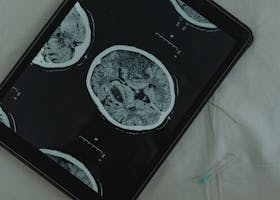 Medical diagnostic software |
| Class C | Moderate-to-High risk | • Energy-Emitting & Imaging Systems: Diagnostic X-ray machines, Ultrasound imaging systems, Lung ventilators • Professional Aesthetic Equipment: Clinical High-intensity focused ultrasound/HIFU, Fractional RF/Laser surgical units • Surgical Implants: Orthopedic bone plates & screws, Hip/Knee implants | 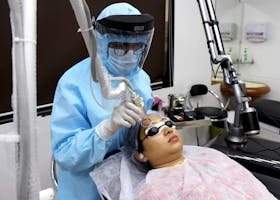 Fractional RF/Laser surgical units |
| Class D | High risk | • Central Circulatory & Life-Support Implants: Implantable pacemakers, Coronary/Vascular stents, Artificial heart valves • Deep Tissue Injectables & Grafts: Hyaluronic acid dermal fillers, Breast implants, Absorbable surgical sutures | 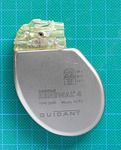 Implantable pacemakers |
■ Certification Process
1. Application for Importer License
1) Proceeding through the Medical Device Information Communication System (MEDICS)
2) Submission of Quality Management System (QMS) documents (the following documents are acceptable)
• ISO13485 Certificate
• GDPMDS certificate issued by a certification body accredited by the Singapore Accreditation Council (SAC)
• GDPMDS Exemption Declaration (Applicable only to items imported and re-exported or for non-clinical purposes)
• QMS Declaration of Conformity (DoC) for companies handling Class A
• Declaration that Class A products are not handled in cases where Class A is not imported
2. Product Registration
1) Class A – Declares a product as exempt from registration without undergoing a separate registration process
• For Class A medical devices supplied in a sterile state, verify compliance with international standards appropriate to the sterilization method
2) Class B, C, D
• If a medical device has been evaluated and approved for sale in at least one (or two for Class D medical devices) of the GHTF founding countries
(Australia, Canada, the European Union, Japan, and the United States), it can be registered through a simplified procedure.
3. General Registration Procedure
1) MEDICS Online Application
2) Authorization document for a representative
3) Factory inspection
4) DoC
5) Review of documents and audit results
6) Approval and SMDR Medical Device Registration
7) Post-audit and management
■ Required Documents
| Administrative and Legal Documents | • Letter of Authorization (LOA) • Medical Device Listing / Device Constitution List • Evidence of Reference Agency Approvals (Mandatory for Abroad, Expedited, and Immediate Tracks) • Evidence of Prior Marketing History (Mandatory for Immediate Track) • Global Safety Declaration (Mandatory for Immediate Track) |
|
| Quality Management System Documents | • Quality Management System Evidence (QMS Evidence) 1) ISO 13485 Certificate of Conformity 2) MDSAP (Medical Device Single Audit Program) Certificate 3) Documents proving compliance with U.S. FDA Quality System Regulations (21 CFR Part 820 / QSR) 4) Certificate of Compliance with Japanese Ministry of Health, Labour and Welfare (MHLW) Ordinance No. 169 |
|
| Technical Dossier by Registration Pathway) | Full Registration Track (Class B, C, D) | • Executive Summary & Device Description: Product design purpose, operating mechanism, and raw material composition specifications. • Essential Principles Checklist: Matrix table regarding compliance with essential safety and performance principles in accordance with ASEAN AMDD regulations. • Declaration of Conformity (DoC): DoC form signed by the manufacturer confirming compliance with Singaporean law. • Full Design Verification & Validation Documents 1) Full preclinical study report (physical and mechanical test data, ISO 10993 biocompatibility study, etc.) 2) Metrological Requirements verification documents 3) Sterilization Validation report 4) Shelf-life & Useful Life Studies reports • Full Clinical Evidence Report (CER): CER containing original full reports of journal publications and referenced clinical studies. • Risk Analysis File: ISO 14971-based full-lifecycle risk management document • Manufacturing Process Flow Chart: Flowchart specifying quality control points for each process • Device Labeling Draft: Copy of English product label and Instruction Manual (IFU) |
| Abridged & Expedited Assessment Enrollment Tracks (Class B, C, D) | • Product Overview, Instrument Manual, EP Checklist, Declaration of Conformity (DoC) • Summary of Design Verification and Validation Documents (Summary of Design V&V Documents): • Submission of Preclinical Study Summary (Summary) including Sterilization Verification and Shelf Life Study Results Allowed Instead of Full Report (if applicable) • Summary of Clinical Evaluation Report (Summary of CER): Summary of clinical data validated in developed countries (submit if necessary) • Summary of Risk Analysis Report and Instrument Label Draft |
|
| Immediate Registration Track (Immediate Registration – Class B, C only) | • Product Overview and Device Description (Executive Summary & Device Description) • Minimal Pre-clinical Summary: • Sterilization Validation Summary (Applicable only to sterile products) • Software Validation and Study Report (Applicable only to standalone medical mobile apps/SaMDs or devices equipped with operating software) • Device Labeling Draft |
|
■ Validity Period and Maintenance
- Validity Period: 1 year
- Annual extension required