

■ Certification Overview
China classifies medical devices into classes I, II, and III based on their risk level and evaluates the risk by considering factors such as the intended use, structural characteristics, and method of use of the medical device.
1) Class I Medical Devices: Medical devices with low risk whose safety and efficacy can be ensured through routine maintenance
2) Class II Medical Devices: Medical devices with moderate risk that require strict control and management to ensure safety and efficacy.
3) Class III Medical Devices: Medical devices with a higher risk that require special measures, such as strict control and management, to ensure safety and efficacy.Class I medical devices are subject to product notification,
while Class II and III medical devices are subject to product registration and licensing management.Clinical evaluation is mandatory for obtaining medical device certification in China, but it may be waived if one or more of the following situations apply.
1) In cases where the operating principle is clear, the design is standardized, the production process is mature, and medical devices of the same type already
on the market have been used in clinical practice for a long time, there is no record of serious adverse effects and the existing use has not been changed
2) Cases where the safety and efficacy of the medical device can be proven through other non-clinical evaluationsMedical device items: https://www.cmde.org.cn/flfg/zdyz/flmlbzh/flmlylqx/index.html
■ Regulatory Bodies & Basic Information
| Regulatory Agencies | NMPA (National Medical Products Administration) |
| Testing Agency | 1. NIFDC 2. Shanghai Medical Device Testing Institute 3. Guangdong Provincial Institute for Drug Control 중국 NMPA 등록 시험소, GB/YY 표준 또는 중국 지침을 갖춘 CNAS 인정 제3자 시험기관 |
| Lead time / Price | Varies by product |
| Language | Chinese |
| Agent | Local agent required |
■ Medical Device Classification
| Class | Risk | Example | |
|---|---|---|---|
| Class I | Low risk | • Manual Surgical Instruments: Surgical scissors, Forceps, Scalpel handles • Examination Device: Medical examination chairs, Surgical lights, Stethoscopes • Physical Therapy Equipment: Medical hot packs, Manual wheelchairs, Orthopedic splints |  Stethoscopes |
| Class II | Medium risk | • Electronic Diagnostic Equipment: Electronic blood pressure monitors, Digital thermometers, ECG monitors, Ultrasound imaging systems • Aesthetic & Medical Laser Devices: Medical laser therapeutic devices, Intense Pulsed Light (IPL) equipment • Surgical & Ward Supplies: Disposable surgical masks & gowns, Disposable syringes, Medical sterilizers • Dental Materials: Dental impression materials, Dental implant surgical instruments, Dental dental units | 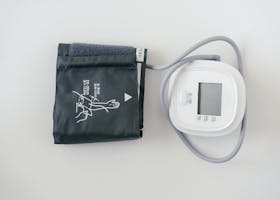 Electronic blood pressure monitors |
| Class III | High risk | • Implantable Medical Devices: Cardiac pacemakers, Artificial joints, Vascular stents • Injectable Biomaterial: Dermal fillers (Injectable sodium hyaluronate gel) • Life Support Systems: Mechanical ventilators, Anesthesia machines, Hemodialysis equipment |  Dermal fillers |
■ Certification Process
- Preparation of samples for translation and testing laboratory
- Preparation of submission documents (product technical requirements, product risk analysis data, etc.)
- Product testing
- Document organization and NMPA submission, and receipt (clinical evaluation or clinical trial)
- Medical Device Technology Review Centre (CMDE) Technology Review
- NMPA Medical Device Registry Review and Approval
- Certificate Issuance
■ Required Documents
| Administrative Information | • Application Form: Official NMPA Registration Application • Domestic Applicant Docs: Duplicate copy of Business Registration Certificate/Copy of Institution Code Certificate, Notification of Approval for Special Review of Innovative Medical Devices (if applicable), Production License and Contract Agreement for Contract Manufacturing • Foreign Applicant Docs: Locally issued Certificate of Sales (CFS) and documents proving corporate status (local sales certificates for unregulated products) • Local Rep Docs: Power of Attorney (POA) for the legal representative in China, Letter of Consent for the Representative, and a copy of the Representative’s Business Registration Certificate/Certificate of Registration • Declaration of Conformity: Declaration of Conformity document submitted only when registering a Class I medical device |
| Device Description & Technical Documentation | • Essential Principles List for Medical Device Safety and Efficacy: A checklist proving that the product complies with Chinese safety standards. • General Description: A document providing a comprehensive explanation of the product’s overview, structure and composition, operating principles, model classification, etc. • Product Technical Requirements (PTR): A core document under China’s unique ‘PTR’ system that standardizes product performance indicators and test methods in accordance with Chinese standards (GB/YY). |
| Labeling & Packaging | • Product Instructions & Label Samples: Chinese manual (IFU) for Chinese users and Chinese label samples to be affixed to the product body/outer packaging (Mandatory compliance with China’s medical device labeling regulations) |
| Quality Management & Manufacturing | • Manufacturing Information: Product manufacturing process flowcharts, production environment (cleanroom, etc.), quality control processes, and raw material supply chain management data |
| Research & Risk Analysis | • Research & Development Data: Backup verification data from the R&D phase demonstrating product performance, shelf life, stability, biological safety, etc. • Risk Analysis Report: ISO 14971-based risk management and assessment report covering the entire product lifecycle |
| Product Testing & Reports | • Product Testing Report: A test report issued in accordance with the ‘Product Technical Requirements (PTR)’ defined above (depending on the product, verification of acceptance requirements for reports from NMPA-accredited local Chinese testing laboratories or overseas in-house reports is required). |
| Clinical Evidence | • Clinical Evaluation Documentation: Clinical trial reports or ‘Clinical Evaluation Equivalence Report (CER)’ data in accordance with Chinese NMPA regulations (Mandatory verification of eligibility for clinical exemption catalog) |
■ Validity Period and Maintenance
- Validity Period
- Tier 1: Permanent (Does not expire)
- Grades 2~3: 5 years
- You must apply for renewal with the NMPA 6 months before the expiration date.
Source
NMPA Homepage
NMPA Standards Search Homepage
CMDE Homepage
Regulations on the Supervision and Management of Medical Devices