

■ Certification Overview
Regulation (EU) 2017/745 (MDR), which integrates and replaces the existing Medical Device Directive 93/42/EEC (MDD) and the Active Implantable Medical Device Directive 90/385/EEC, has been implemented. The regulation came into full effect on May 26, 2021.
Medical devices are classified into Class I (I m, I s, I r), Class IIa, Class IIb, and Class III according to their risk level.
All medical device products, excluding Class I, must undergo the conformity assessment procedure through a Notified Body (NB). Class Im (measuring function), Is (sterile condition), and Ir (reusable surgical) must also undergo certification through an NB.
Strict procedures have been introduced for the designation of Notified Bodies (NBs), conformity assessment, and post-market surveillance. The scope of the regulation has been expanded to include specific product categories without a medical purpose, such as cosmetic colored contact lenses and liposuction surgical equipment, under MDR management.
■ Regulatory Agencies & Basic Information
| Regulatory Agencies | European Conformity(CE) |
| Certification (Registration) Authority | 1. TUV Rheinland 2. TUV SUD Product Service 3. BUREAU VERITAS |
| Quality System | It must be established based on the EN ISO 13485 standard and must mandatorily meet enhanced MDR requirements. |
| Lead time & Price | Varies by product |
| Language | English & Target Market Language |
| Agent | A local agent is required in the region |
■ Medical Device Classification
| Class | Example | |
|---|---|---|
| Class I | • Manual wheelchair • Vision correction glasses • Disposable Masks |  Disposable Masks |
| Class I m (measuring function) | • Clinical Thermometer (Passive) • Blood pressure monitor (Passive) • Blood glucose meter |  Clinical Thermometer (Passive) |
| Class I s (sterile condition) | • Sterile syringes • Sterile gauze and bandages • Sterile surgical supplies |  Sterile syringes |
| Class I r (reusable surgical) | • Forceps & Clamps • Surgical Scissors • Retractors |  Retractors |
| Class IIa | • Clinical Thermometer (Active) • Dental Fillings • Hearing aids | 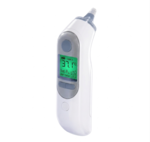 Clinical Thermometer (Active) |
| Class IIb | • Ventilator • Hemodialysis machine • Surgical Laser Devices | 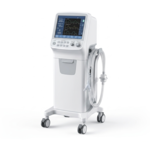 Ventilator |
| Class III | • Heart valves • Hip prosthesis • Implantable Drug Injector | 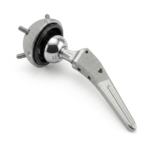 Hip prosthesis |
■ Certification Process
- Check the applicable EN, ISO, and IEC standards of the product
- Quality System Establishment and Reporting System
- Product Risk Analysis
- Product testing and verification
- Writing technical documents
- Conformity assessment
- Selection of European Agent and Contract
- CE Certificate Issuance
- Register device with EUDAMED
■ Required Documents
| Legal and administrative required documents | • EC Rep Agreement: For manufacturers outside of Europe, a contract concluded with an agent within Europe. • EUDAMED Registration: Information on the manufacturer, agent, importer, and device registered in the EUDAMED system. • Certificate of Free Sale (if required): May be required for exports to certain countries. • Insurance Certificate: Confirmation of product liability insurance coverage in accordance with MDR regulations. |
| EU Declaration of Conformity (DoC) | • Manufacturer Information: Legal identification information such as the company name, address, and contact details. • Manufacturer’s Liability Declaration: An official statement that the manufacturer assumes all legal responsibility for the Declaration of Conformity. • Basic UDI-DI: A unique identifier (Basic UDI-DI) code identifying the product family. • Product Identification Information: Product name, brand, code, catalog number, and appearance photos (including items that can be replaced by UDI-DI). • Risk Class: The MDR classification class of the medical device (Class I, IIa, IIb, III, etc.). • Compliance Declaration: A declaration that the medical device complies with all European MDR regulations and relevant laws. |
| Technical Documentation | • Device Description and Specifications: Detailed documentation regarding the product’s configuration, key functions, and technical specifications. • User Manual: Guidebooks written in English and the relevant national language to enable users (medical professionals and patients) to use the product safely. • Labels and Indications: Product labels and packaging information written in the language of the country of sale. • Design and Manufacturing Information: Technical data regarding the product’s design drawings, manufacturing processes, and production sites. • General Safety and Performance Requirements (GSPR): Documents proving that the product meets essential safety and performance standards. • Risk Management and Analysis: Records of managing potential product risks, including benefit-risk analysis. • Product Validation Data (Clinical/Preclinical Data): Results of various experiments and clinical trials demonstrating the product’s performance. • Post-Marketing Surveillance (PMS) Documents: Systems and technical data for continuously monitoring performance and potential issues that may arise after product launch. |
| Quality Management System (QMS) Document (ISO 13485 Standard) | • Quality Manual: The highest-level document containing the quality policy, organizational chart, work procedures, etc. • Standard Operating Procedures (SOP): Operational procedures for design management, purchasing, manufacturing, inspection, nonconformity control, corrective and preventive actions (CAPA), etc. • Risk Management File (ISO 14971): Risk management records from the design phase to post-release • Document and Record Management Procedures: History management of all technical documents and quality records |
| Additional documents related to clinical evaluation and post-marketing surveillance (PMS) | • Clinical Evaluation Report (CER): A comprehensive report demonstrating safety and performance by evaluating clinical data. • Post-Marketing Clinical Follow-up Plan (PMCF Plan): A plan to continuously update the clinical performance of a product after it is marketed. • Post-Marketing Safety Update Report (PSUR): For Class IIa devices and above, a report analyzing data obtained through post-marketing surveillance periodically. • Post-Marketing Surveillance Report (PMS Report): Mandatory for all classes, including Class I devices, a report summarizing post-sales feedback and incident records. |
■ Validity Period and Maintenance
- Certification Validity Period: 5 years
- ISO 13485:
- Initial Certification Audit: Start of 3-year validity period
- Follow-up audit: Conducted annually
- Renewal Review: At the end of the 3-year validity period
▪ Source
Harmonized Standards
In vitro diagnostic medical devices Regulation (EU) 2017/746
MDCG Guidance