

■ Certification Overview
The U.S. FDA considers products that meet the definition of a medical device under Section 201(h) of the Food, Drug, and Cosmetic Act to be medical devices and applies FDA regulations to them.
Under Section 201(h)(1) of the Food, Drug, and Cosmetic Act, medical devices defined in the United States are as follows:
instruments, devices, tools, machines, mechanical devices, implants, in vitro reagents, or other similar or related items including components or accessories that fall under the following items
- Those recognized in the Official National Pharmacopoeia or the United States Pharmacopoeia or supplementary materials thereto
- Those intended for use in the diagnosis, treatment, alleviation, management, or prevention of a disease or other condition of humans or other animals
- Those intended to affect the structure or function of the body of humans or other animals, which do not achieve their primary intended purpose through chemical action within or on the body and do not rely on metabolism to achieve their primary purpose
The U.S. FDA classifies medical devices into Class I through Class III based on their risk level.
1. If the medical device is Class I or Class II and is not eligible for an exemption, it must be approved by the FDA via 510(k); if the device is eligible for an exemption,
certain restrictions apply.
2. If a medical device falls under Class III, it usually requires premarket approval (PMA).There are no separately designated laboratories for product testing; the manufacturer must obtain all necessary documentation through an appropriate laboratory or inspection agency to proceed with procedures such as notification and authorization.
■ Regulatory Bodies & Basic Information
| Regulatory Agencies | FDA (Food and Drug Administration) |
| Certification (Registration) Authority | CDRH under the FDA |
| Quality System | QMSR (Direct reference to ISO 13485:2016) |
| Average certification time/cost | Varies depending on the product |
| Language | English |
| Agent | A local U.S. agent is required |
■ Medical Device Classification
- Classification: Classified into Class I, II, and III based on risk level
| Class | Risk | Example | |
|---|---|---|---|
| Class I | Low risk | • Manual Wheelchair • Medical Gloves • Elastic Bandages • Scalpels • Dental Floss | 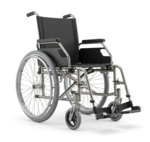 Manual Wheelchair |
| Class II | Intermediate risk | • Blood Glucose Monitor • Powered Wheelchair • Condoms • Ultrasound Diagnostic Devices • Infusion Pumps | 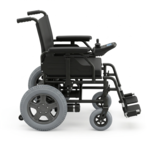 Powered Wheelchair |
| Class III | High risk | • Pacemaker • Heart Valves • Breast Implants • Ventricular Assist Devices • High-risk IVD | 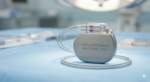 Pacemaker |
- Types of certification
- 510(k) (Pre-market notification): This is the process of proving ‘substantial equivalence’ with devices that are already legally sold.
- 510(k) database: 510(k) Database
- PMA (Pre-market Approval): This applies to high-risk (Class III) devices, and clinical data to demonstrate safety and efficacy is essential.
- PMA database: PMA Database
- 510(k) (Pre-market notification): This is the process of proving ‘substantial equivalence’ with devices that are already legally sold.
■ Certification Process
- Medical Device Classification Verification
- Determination of approval procedures based on classification (510(k)) or (PMA)
- Pre-market data submission and FDA submission
- FDA Review and Review
- FDA Establishment Registration and Product Listing
■ Required Documents
The U.S. FDA requires submission via online filing using eSTAR (Electronic Submission Template) or the CDRH document portal, depending on the product class.
- 510(k) (Pre-market notification)
| Administrative Information | • Cover Letter: Information on the applicant, manufacturer, and agent, and the purpose of submission • Proof of Fee Payment (User Fee Cover Sheet) • Pre-Submission History |
| Device Description & Substantial Eqivalence | • Device Description: Operating principle, physical/chemical composition, structural drawings, photographs, list of components, etc. • Indications for Use: Specify target patient group, indications, and usage environment. • Comparison Table: Equivalence comparison documents analyzing differences in technical characteristics and intended use with selected similar products. |
| Labeling & Packaging | • Labeling and Packaging Proposal (Proposed Labeling): Device body label, individual packaging label, box label draft • Instructions for Use (IFU): User/physician manual, technical instructions |
| Sterility & Shelf-Life | • Sterility Validation: (For sterile products) Processing and residue test reports in accordance with ISO 11135 or ISO 11137, etc. • Shelf-Life & Transport Stability: Accelerated/Real-Time Aging Test Reports and Packaging Integrity Test Reports |
| Biocompatibility | • ISO 10993-based evaluation report: Biocompatibility Evaluation Report (BER) based on patient contact site and duration, and test reports for cytotoxicity, sensitization, irritation, etc. |
| Software & Cybersecurity | • Software Validation Documentation: If the product includes software/firmware (including SaMD), software documentation in accordance with FDA guidelines, risk management, and verification and validation (V&V) reports. • Cybersecurity: If the product has network connectivity or may have security vulnerabilities, a security management plan including threat modeling, vulnerability assessment, and a Software Bill of Materials (SBOM), as well as test data. |
| Electrical Safety & EMC | • Electrical Safety Report: Test report in accordance with standards such as ANSI/AAMI ES60601-1 • Electromagnetic Compatibility Report (EMC Report): Test report in accordance with standards such as IEC 60601-1-2 |
| Performance Testing | • Bench Testing: Verification report of the product’s inherent mechanical, electrical, and technical functions • Usability/Human Factors: Usability Engineering Report (Human Factors Validation Test Report) evaluating the potential for medical errors • Clinical Data: Clinical trial results report (if required) |
- PMA (Premarket Approval)
| Administrative & Summary | • Cover Letter and Proof of Fee: Applicant information, US Agent information, and confirmation of PMA User Fee payment. • Full Summary (PMA Summary): Approximately 10–15 pages in length, a concise summary covering the product overview, intended use, alternative treatments, domestic and international marketing history, and conclusions from non-clinical and clinical trials. • Analysis of Alternative Practices (Alternative Practices): An analysis comparing the advantages and disadvantages of other commercially available medical devices or treatments (medical/surgical) currently on the market for diagnosing or treating the relevant disease. • Marketing History: Submit all relevant history and data if the product is already being sold in countries outside the U.S. or has been recalled or withdrawn due to safety issues. |
| Device Description & Manufacturing | • Comprehensive Device Description: Physical/chemical composition of the product, principles of operation, detailed drawings, circuit diagrams, and specifications for components and accessories. • Manufacturing & Quality System: This is one of the biggest differences from the 510(k). You must describe in detail the manufacturing process, raw material suppliers, facility drawings, process validation (IQ/OQ/PQ), and quality control test procedures in accordance with the FDA’s latest QMSR (Quality Management System Regulation, based on ISO 13485:2016). |
| Nonclinical Laboratory Studies | • Bench Testing: Fatigue testing, durability testing, mechanical/physical property testing • Electrical Safety and EMC: Mandatory test reports for electrical devices • Biocompatibility: As there are many devices for organ transplantation or blood contact, extensive evaluation reports including organ toxicity, carcinogenicity, genotoxicity, etc., in accordance with ISO 10993 • Sterility and Shelf-Life: Sterility validation and packaging durability testing • In Vivo Animal Studies: Animal study design, procedures, and histopathology test results reports to confirm safety and initial efficacy prior to human clinical trials • Software and Cybersecurity: If the device includes software, cybersecurity build documents including the highest level of risk management documentation and SBOM |
| Clinical Investigations | • Clinical Study Report (CSR): Clinical protocol, subject selection and exclusion criteria, Statistical Procedure Plan (SAP), and results • Safety and Efficacy Data: Achievement of primary and secondary efficacy endpoints, statistics on adverse events and complication rates • Case Report Forms (CRF) and Individual Data: Submission of backup copies of unprocessed raw data to allow FDA reviewers to re-analyze statistics directly • Medical Scientist/Statistician Review: Expert analysis demonstrating that the clinical results are statistically and medically significant |
| Labeling | • Physician Labeling: Instructions for use, indications, contraindications, warnings, and precautions for physicians and healthcare professionals • Patient Labeling: Patient education manuals written in easy-to-understand language regarding the risks and care methods patients need to know when receiving or using the device |
■ SBD(Small Business Determination)
The U.S. FDA’s Small Business Determination (SBD) is a certification program for small and medium-sized enterprises that significantly reduces licensing fees for medical device manufacturers with annual sales below a certain standard.
- Fee Reduction Benefit: Upon SBD certification, receive a reduction of approximately 75% on major pre-market regulatory review fees,
including 510(k), PMA, and De Nove. - Eligibility: Global gross revenue (including affiliate revenue) in the tax year immediately preceding the application is $100 million or less.
- First-time Benefit: Fees are fully waived for the first PMA application
- SBD Application Process
- Create Account & ID
- Form Submission: Foreign manufacturers must complete FDA Form 3602A.
- Submission and Review
- FDA SBD Program Guide
■ Validity Period and Maintenance
- Certification validity period: 510k) and the PMA approval itself is maintained indefinitely.
- Facility registration renewal: 1 year (annually)
- SBD (Small Business) Renewal: 1 year (annually)