

1. Certification Overview
In accordance with Thai medical device regulations, medical devices imported into Thailand must obtain a prior authorization document through the Medical Device Management Headquarters of the Thai Food and Drug Administration.
Medical device products in Thailand are classified into four categories (1–4 / low risk–high risk) according to risk, and product classification follows the ASEAN MDD guidelines.
In Thailand, you must follow one of three routes to obtain an import permit depending on the medical device classification.
1) Class 1 Medical Devices: Product Registration
2) Class 2 & 3 Medical Devices: Product Notification
3) Class 4 Medical Devices: Product Approval
Medical devices of classes 2 to 4 must submit product applications in the Common Submission Document Template (CSDT) format.
2. Regulatory Bodies & Basic Information
| Regulatory Agencies | Thailand FDA (Food and Drug Administration, Thailand) |
| Certification (Registration) Authority | Medical Device Management Headquarters under the Thai Food and Drug Administration |
| Lead time / Price | Varies by product |
| Language | Thai or English |
| Agent | A local agent in Thailand is required |
3. Medical Device Classification
| Class | Risk | Example | |
|---|---|---|---|
| Class 1 | Lowest risk | • Hospital Furniture & Mobility Aids: Hospital beds, Manual wheelchairs • Non-invasive Diagnostic & Examination Tools: Medical thermometers, Examination gloves • Basic Surgical Consumables: Surgical bandages, Gauze & Surgical drapes |  Surgical bandages |
| Class 2 | Low to Moderate risk | • Powered Home-use Care Devices: Electronic sphygmomanometers, Blood glucose meters • Surgical Wear & Consumables: Sterile surgical gloves, Disposable syringes without needles • Energy-based Home Beauty Devices: High-frequency/RF skin care tools, EMS microcurrent devices | 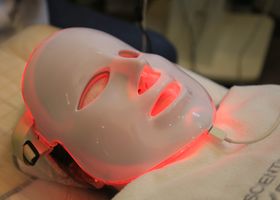 LED light therapy masks |
| Class 3 | Moderate to High risk | • Active Diagnostic & Imaging Equipment: Ultrasound imaging systems, Diagnostic X-ray apparatus • Infusion & Respiratory Support Devices: Infusion pumps, Anesthesia breathing circuits • Professional Aesthetic Equipment: High-intensity focused ultrasound/HIFU for clinical use, Surgical lasers | 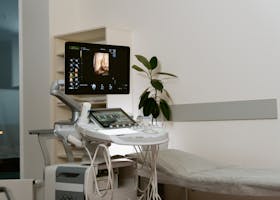 Ultrasound imaging systems |
| Class 4 | Highest risk | • Central Circulatory & Cardiac Implants: Implantable pacemakers, Coronary stents • Long-term Surgical Implants: Artificial heart valves, Orthopedic bone plates | 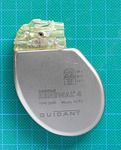 Implantable pacemakers |
4. Certification Process
1. Medical device registration
- Electronic submission and document submission are available
- 1) Submission of application via E-submission system
- 2) Consideration of the manager’s completeness and accuracy
- 3) Approval decision by the manager
2. Medical device notification and approval
- Medical device classification
- Complete submission documents and apply for the appropriate certification type based on the classification
- Approval or non-approval based on the regulatory authority’s judgment
- Market launch
Medical devices of Class 2 to 4 that meet the following conditions may apply for certification through the Concise pathway or the Reliance program.
1) Concise pathway
Products sold on the market for more than one year without serious adverse events, backed by certificates issued by the EU Notified Body (NB), Canada Health Canada (HC), Japan Ministry of Health Labour and Welfare (MHLW), Australia Therapeutic Goods Administration (TGA), US Food and Drug Administration (US FDA), or WHO Prequalification of In Vitro Diagnostics (IVD).
5. Required Documents
1. Medical device registration
| Required documents | • Medical device label • Medical device product specifications • General characteristics and mechanism of action • Details and characteristics of materials used in manufacturing • Declaration of conformity • Power of attorney • Report of test results according to standards (if the medical device is subject to specific controls) |
| Optional required documents | • Medical device manual • Documents on overseas registration history (if registered abroad) • Documents on sterilization test results (if sterilization is required) • Test or verification documents (for measuring devices) • Documents explaining and justifying medical device grouping (if applicable) • Other attached documents |
2. Medical Device Notification, Approval – ASEAN CSDT Format
| 1. Medical Device Label 2. Medical Device Instruction Manual 3. Medical Device Overview Report 1) Medical Device Overview 2) Registration Approval and Market Launch History 3) Withdrawal History (if applicable) 4) Status of In Progress Registration or Authorization (if applicable) 5) Adverse Event Report (AE) 6) Field Safety Corrective Action (FSCA) Report 7) Specific Substances Included in the Medical Device (Inactivated Human or Animal Tissues/Derivatives, Microorganisms or Genetically Modified Microorganisms, Ionizing Radiation Emitting Components) 4. Medical Device Detail Description 1) General Characteristics and Mechanism of Action 2) Intended Use 3) Indications 4) Method of Use 5) Storage Method 6) Shelf Life 7) Contraindications 8) Warnings 9) Precautions 10) Adverse Events 11) Alternative Therapies 12) Details and Characteristics of Materials Used in Manufacturing 13) Product Specifications 5. Essential Principles 6. Validation and Verification Summary 7. Risk Analysis Report 8. Name and Address of Medical Device Manufacturer, Manufacturing Information or Product Owner Information 9. Post-Use Waste Disposal Method 10. Manufacturing Quality System Certificate (ISO/GMP) 11. Declaration of Conformity 12. Letter of Authorization (LoA) 13. List of Grouped Medical Devices and Explanation of Reason for Grouping (if applicable) |
6. Validity Period and Maintenance
- Validity Period: 5 years from the date of issue, regardless of class (Class 1–4)
- Renewal Cycle: Apply for renewal at least 9 to 12 months before the permit expires.
- Labeling: Mandatory Thai labeling within 120 days of import
- Advertising Permit: 3 years