

1. Certification Overview
The Philippines Food and Drug Administration (PFDA) is a regulatory agency under the Department of Health and is responsible for ensuring the safety, efficacy, or quality of health products, including food, drugs, cosmetics, medical devices, biological products, vaccines, in vitro diagnostic reagents, radiation-emitting devices or equipment, pesticides, toys, household/urban hazardous substances, or consumer products that may affect health as regulated by the FDA, in accordance with Republic Act No. 3720 of 1963 (“Food, Drugs and Medical Devices and Cosmetics Act”), amended by Executive Order No. 175 of 1987.
Through Philippine FDA (PFDA) certification, you can apply for a Licensed Operating Office (LTO), Certificate of Product Registration (CPR), and Product Notification. For medical devices, Product Notification is required.
2. Regulatory Bodies & Basic Information
| Regulatory Agencies | PFDA (Philippines Food and Drug Administration) |
| Testing Agency | FDA-certified testing laboratory 1. ADIP TRLab Inc. 2. Intertek Testing Services Philippines, Inc. PAB (Philippine Accreditation Board) Certified Laboratory 1. TUV Rheinland Philippines, Inc. 2. SGS Philippines Inc. |
| Lead time / Price | Varies by product |
| Language | English or Filipino |
| Agent | A local agent in the Philippines is required |
3. Medical Device Classification
| Class | Risk | Example | |
|---|---|---|---|
| Class A | Low risk | • Basic Clinical Examination Tools: Mechanical stethoscopes, Tongue depressors, Ophthalmoscopes • Manual Patient Aids & Hospital Furniture: Manual wheelchairs, Hospital beds, Crutches • Simple Surgical Consumables: Non-sterile bandages & Gauze, Surgical drapes |  Non-sterile bandages & Gauze |
| Class B | Low to Moderate risk | • Electronic Diagnostic & Measuring Devices: Electronic blood pressure monitors, Digital thermometers, Hearing aids • Surgical Wear & Consumables: Sterile surgical gloves, Disposable syringes without needles • Home-use Aesthetic Devices: Low-power LED masks, Galvanic/Microcurrent skin care tools |  Galvanic/Microcurrent skin care tools |
| Class C | Moderate to High Risk | • Active Therapeutic & Imaging Equipment: Diagnostic X-ray apparatus, Ultrasound imaging systems, Electric scalpels • Critical Patient Support Systems: Infusion pumps, Patient monitors • Professional Aesthetic & Invasive Materials: Clinical High-intensity focused ultrasound/HIFU, Hyaluronic acid dermal fillers, Contact lenses | 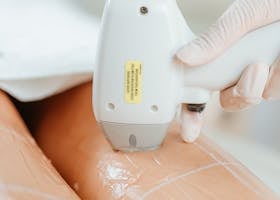 Clinical High-intensity focused ultrasound/HIFU |
| Class D | High Risk | • Central Circulatory & Life-Sustaining Implants: Implantable pacemakers, Coronary/Vascular stents, Artificial heart valves • Advanced Life-Support Systems: Mechanical ventilators, Defibrillators, Anaesthesia machines • Long-term Surgical Implants: Orthopedic bone plates & screws, Bone grafts | 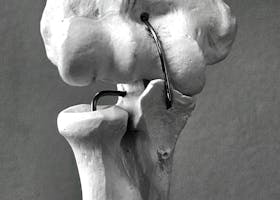 Orthopedic bone plates & screws |
4. Certification Process
- Medical Device Notification: Class A, Class B, C, and D medical devices not included in FDA Circular 2020-004-A
- Applicant companies are granted authorization after requesting an FDA user account via email.
- Authorized agents complete online forms/electronic declarations through the portal
- Upload all documents specified on the checklist
- CDRRHR Application Pre-evaluation
- Once all requirements are deemed fulfilled, the applicant company shall pay the fee upon receipt of the payment order.
- Application evaluation and quality assurance after payment receipt
- Final Approval/Disapproval Decision
- Medical Device Product Registration: Class B, C, D Medical Devices
- Applicants must send an email containing the application PDF file to cdrrhrproductregistration@fda.gov.ph according to the application schedule.
- The receptionist will send the application approval email and the pre-assessment application form.
- After receiving the application approval email, the applicant must pay the fee and submit an official receipt for the fee.
- Approval/rejection decision made after technical evaluator’s review of the application
- Quality Assurance Verification, CPR Drafting, and Finalization
- Number assignment and CMDR printing after final approval decision
- Register the relevant information in the record book
- Registration and Market Launch in FDA Public Information
5. Required Documents
1. License to Operate (LTO)
| 1) Consolidation Application Form 2) Proof of Fee Payment 3) Certificate of Business Registration 4) Certificate of Business Address 5) Product List 6) Location Map 7) Floor Plan/Layout of Product Manufacturer |
2. Medical Device Reporting
| 1) One notarized contract or Letter of Agreement (LOA). 2) For imported medical devices – One copy of a government-issued certificate proving the capability and reliability of the manufacturer’s personnel and facilities, a quality system approval certificate, or an ISO 13485 compliance certificate. 3) For imported medical devices – One copy of a product declaration certificate, product registration certificate, or equivalent document issued by the manufacturer (self-declaration), regulatory authority, or accredited notification body in the country of origin proving the safety and efficacy of the product. 4) One color photograph of an actual commercial product sample. CDRRHR may request actual representative samples or commercial products for verification 5) Product description consisting of the following: (1) Purpose of use (2) Instructions for use (3) List of raw materials (4) Technical specifications of the finished product 6) (If applicable) One copy of the Certificate of Conformity for the manufacturing aspects related to metrology of instruments with measuring functions (issued by a government agency or equivalent body) 7) Declaration of Conformity (DoC) including a list of product standards 8) Photograph of the entire label on the packaging of all application products 9) Declaration of expiration date 10) Receipt |
3. Medical Device Registration
| 1) Notarized application form 2) One notarized contract or Letter of Agreement (LOA) 3) For imported medical devices – One copy of a government-issued certificate proving the capability and reliability of the manufacturer’s personnel and facilities, a quality system certificate, or an ISO 13485 certificate. 4) For imported medical devices – One copy of a product declaration certificate, product registration certificate, or equivalent document issued by the manufacturer (self-declaration), regulatory authority, or accredited notification body in the country of origin proving the safety and efficacy of the product 5) One color photograph of an actual commercial product sample. CDRRHR may require actual representative samples or commercial products for verification 6) Summary of Technical Requirements (1) Overview (2) Commercial Marketing History (3) List of acquired regulatory or marketing approvals (4) Status of pending market authorization requests and important safety/performance information 7) Relevant essential principles and methods used to demonstrate conformity 8) Device description including the following information (1) Intended use (2) Indications for use (e.g., target patient population for medical device) (3) Instructions for use (4) Contraindications (5) Warnings (6) Precautions (7) Potential side effects (8) Alternative therapies (if applicable) (9) Raw materials or formulations (10) Other relevant specifics 9) Summary of design verification and validation documents (1) DoC or CoC for product standards (2) Summary of tests and evaluations based on animal studies, preclinical studies, etc. (if applicable) 10) Color photographs of the label on all sides of the packaging 11) Risk analysis (1) Risk Identification (2) Submission of Failure Mode Effects Analysis (FMEA)/Risk-Benefit Analysis 12) Actual Manufacturer Information (1) Manufacturing Methods Including Quality Assurance Methods (2) Approximate Overview of Sterilization Methods 13) Receipt |
6. Validity Period and Maintenance
- Medical device notification (Class A): 5 years
- Medical device registration (Class B, C, D): 5 years
- ISO 13483: 3 years